

Cracked
Macabre Monday Feature | April | Issue No. 1

Editor’s Note
Welcome to the first monthly issue of Macabre Monday.
I have wanted to do something like this for a long time. If you’re here, you probably know the feeling, that specific hunger for people who take horror seriously. Not grimly, not academically (well, sometimes academically), but with the kind of enthusiasm that makes you grab someone by the arm and say you have to see this film or I need to talk about that ending.
This is a space for that.
You’ll find two articles today: a feature where we discuss the evolution of horror (monsters in particular), and a personal essay from your local grave tender, Shaina Read, about a night in Kauai that I still can’t fully explain. Both pieces are about the same thing: fear.
This issue is light (we’re just getting started), but like all of Macabre Monday, we want this to be yours too. Got a film or book you can’t stop thinking about? A horror opinion that needs an audience? Short fiction, art, a true (or half true) scary story? This zine runs on community, and I want to feature the people in it. Reach out1. Get weird with it. We’re just getting started.
New to Macabre Monday? Welcome to Substack’s horror corner. We host a weekly chat thread where you can easily post and find the best horror on Substack, each week we feature stories, articles and poems from the community, and once a month, you get a feature article like the one you’re reading. Stick around. You won’t regret it!
cracked
/krækt/
-adjective-
Damaged by a line or lines of fracture without complete separation of parts; breached but not yet broken. “The shell was cracked but had not yet given way.”
informal Of a person: mentally or emotionally compromised; structurally unsound though outwardly intact. Distinguished from broken by the implication that something remains — and that what remains is unpredictable. “Everyone could see she was cracked long before she admitted it herself.”
-verb-
Broke partially; caused to fracture without full separation. “She cracked the egg against the rim of the bowl.”
-noun-
crack of dawn; The precise moment at which light first divides the dark; threshold between night and what follows it.
“She was gone before the crack of dawn, and left nothing to say she had been there.”
Origin: Old English cracian, of Germanic origin; related to Dutch kraken. The sense of mental unsoundness appears c. 1700. The sense of exceptional skill emerges c. 2015, via online gaming communities.
Do you know what’s inside? Hmm? If you lean in, you’ll see it’s almost time. The thing is cracked. Not wide, but enough so that you can see a web of color inside. The color of blood. Whatever it is, we’ll find out together, won’t we?
This, dear readers, is how I came to write this feature.
Weapons.
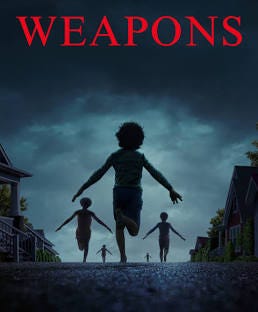
It wasn’t just Weapons mind you. Over the last year, I watched a series of horror flicks, and had dozens of interesting followup discussions with fellow horror fans that planted the seed for this article.
The general takeaway was this: horror has taken a weird turn.
It’s not meant to be a criticism (I like weird). It is simply an observation about the genre. Horror has always knocked society on its heels a bit. Maybe I’m just party to a post-King/Hitchcock/Lovecraft/Shelley world that allows me the delusion of imagining that this (IT, Rear Window, The Call of Cthulu, Frankenstein) simply is, and always has been horror.
What is the this I’m referring to? I’ll sum it up: the evil is inside you. That’s right folks. The modern horror story is here to remind you that “the call is coming from inside the house.” But horror wasn’t always this way. Let’s crack it open a little wider, and see what’s inside.
I. The Mythical Monster
Let’s start at the beginning, with myth. The Minotaur, Medusa, Scylla and Charybdis. Grendel in his mere. These monsters occupy a fixed location — the labyrinth, the island, the underwater hall — and the hero’s task is to go there, confront the thing on its own ground, and survive the encounter. The monster is immovable. It waits. The horror of the encounter is the horror of transgression. You went somewhere you should not have gone, and now you must face what lives there.
What these monsters don’t do, is follow you home.
II. Medieval Horror
Ah, the time of the dreaded other. The devil, demons, and of course witches, who wield their power against the innocent.
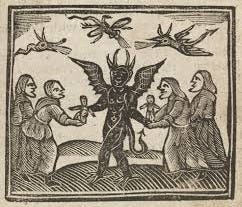
The external monster was supplemented by the infiltrating one. The devil did not live in the forest. The devil was everywhere, in everyone, whispering at the seam of every mind that had not fortified itself sufficiently with faith. Evil was no longer in a place. It was a susceptibility. The horror had moved from landscape to the interior person, but it was still, crucially, an intrusion. Something from outside that had gotten in.
III. The Gothic Turn
The Gothic novel of the eighteenth and nineteenth centuries is where the modern horror lineage begins, and it is here that the monster’s inward journey takes its first decisive step. Horace Walpole, Ann Radcliffe, Matthew Lewis, and later Mary Shelley and Bram Stoker gave the genre its architecture (quite literally). The Gothic is obsessed with structures: castles, manors, crypts, old houses whose physical decay is a direct expression of the moral decay of the people inside them.
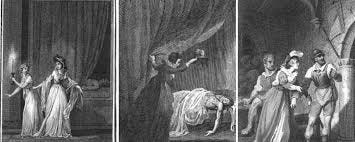
The monster is still largely external. Dracula comes from Transylvania. The creature in Frankenstein is built from other bodies and animated by transgressive science. But something is shifting. The Gothic monster is increasingly a reflection. Victor Frankenstein’s creature is explicitly the externalized consequence of his creator’s ambition, his hubris, his refusal to accept natural limits. The monster and its maker are bound. You cannot fully separate them. The horror is not just the creature. The horror is what the creature says about the man who made it.
IV. 20th Century Horror
Twentieth-century horror, particularly American horror, split into two streams that ran parallel for decades before converging. The first was the external monster perfected. That’s right folks, creature features, alien invasions, giant radioactive animals. These films and stories were not naive. They were allegories, Cold War anxieties wearing rubber suits, but their monster remained, formally, outside.
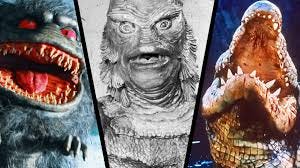
It came from space!
It came from the sea!
It came from the atomic test site!
The threat was identifiable, and in the final act, destroyable.
The second stream was quieter and laid the foundation for modern horror. Shirley Jackson’s The Haunting of Hill House (1959) gives us a haunted house that may not be haunted at all. Eleanor Vance does not encounter a monster. Eleanor Vance encounters herself, in a house that seems to have been architecturally designed to resemble the interior of an unstable mind. The horror is not that something got into the house. The horror is that Eleanor fits there so perfectly.
Rosemary’s Baby (1968). The Exorcist (1973). The Shining (1980). These books turned films were the foundational texts of horror’s mainstream golden age. All share a preoccupation that their surface plots obscure. They are all, at some level, about the family. What happens when the domestic space turns against itself? What happens when the husband becomes the threat, the child becomes a vessel for Satan, the mother cannot trust her own body or mind? The monster isn’t outside. It’s at home, eating with you at the breakfast table. It has a familiar face, and it knows you by name.
V. The Modern Horror Story
The last thirty years have completed the inevitable journey. Contemporary horror has largely abandoned the external monster as its primary engine. There are exceptions to this of course. The slasher, or the creatures in folk horror stories come to mind. But the most culturally resonant horror of the day has found terror definitively inside the self.
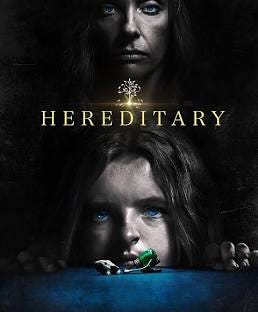
Hereditary (2018), a film about grief so severe it becomes indistinguishable from possession. Midsommar (2019), a film about a woman whose interior collapse is so total that a death cult begins to look like community. Pearl (2022) gives us a villain whose monstrous behavior is born not from supernatural infection, but from thwarted longing, from the gap between who she wanted to be and what the world permitted. The monster, in each case, grows from the inside out.
VI. Why Now
It is worth asking why horror is being presented this way at this particular moment in history. The external monster was always a projection. The wolf at the door was never just a wolf. It was poverty, war, the stranger, death. The monster is a container for what the culture can not say directly.
So what is horror saying to us now? We do not trust ourselves. We do not trust our institutions. We do not trust the appearance of good. We do not trust relationships, which are capable of concealing sustained cruelty behind the appearance of love. We do not trust our own minds, which are susceptible to manipulation, radicalization, and the slow infiltration of ideas that reshape us without our conscious consent.
The monster moved inside because that is where the fear lives now. Not at the border of our village. Not in the forest. Not in the dark beyond the firelight. Now we find ourselves asking…Do you know what’s inside? Hmm? If you lean in, you’ll see it’s almost time. The thing is cracked wide open now. I can see the gushing, pulsing red. The color of blood.
Let’s find out. Together.
It Happened to Me
“Lights Out”
By Shaina Read
In October of 2022, I took my family of four on our first vacation. We had traveled, but only to visit parents, friends, siblings. Never had we ventured out as our own little unit, and this was a big one. Kauai. I purchased tickets, reserved an Airbnb, and waited.
I have never managed to shake my fear of flying, but in my case, the anxiety is always a prequel to the act. Once I’m in the air, I can surrender to the inevitable. But in the months leading up to a trip (and that trip in particular), I spent many anxious nights imagining crashing into the blue ocean.
I grew up in Colorado, far from any water, and only visited the ocean a handful of times as a kid, including a cruise to the Bahamas. A family friend took me along on a trip with her daughter, when I was in third grade. To this day, nearly thirty years later, I can still picture waking up in the middle of the night, and peering out of the little round window in our cabin. Black ocean waves licked up the side of the boat. In the distance, dark water met darker sky. I was terrified.
Maybe my fear of the ocean started then. Whatever the case, I have made it a point to never stay away. You can’t let fear get the best of you. After all, life isn’t some horror movie guys. Right? Guys?!
Fast forward to this trip. It was great for the most part. We went on hikes and swam in the ocean and ate fish. The place I rented was on a cliffside. You could hear the waves crashing at night. The sound kept me awake. One hot night, I woke up sweating, the endless ocean loud and uncaring. All I could think about was how many people had died in its waters, their bodies pulled down into endless depths.
It sounds like death, I thought. (I promise, I’m not a downer. Really.)
Our days were much brighter. We spent most of our time at the beach. I swam, attempted (and failed) to surf, and explored waterfalls and bamboo forests. Before we knew it, it was time to go home. I packed our sandy clothes, put the kids to bed, and cleaned the place up before popping a Melatonin and heading to bed. The air was still and humid, and even with the windows open, it was too hot to sleep. Just as I finally started to drift, I remembered I had left the upstairs window open. My son’s bed was set up close to it, and in a panic I imagined what would happen if somehow he pushed through the screen in the middle of the night.
(Thanks mom brain).
I sat up, and heard voices out on the lawn below.
“Are you okay?” a woman’s voice called. I got up and saw she was with someone. Both of them were looking out to the ocean.
It was shallow and rocky below the cliffs. On our first morning there, we explored a few trails leading down to the ocean. Signs warned of the risks of going out at high tide. The waves were too rough, and the coral and rocks too dangerous for swimming. I followed the line of sight, and saw what looked like a flashlight bobbing in the water.
“Are you okay out there?” the voice called again, and I realized to my horror, that someone was out there. They must have wandered down the wrong trail.
The bright light dipped under the water for a moment, then came up again, shining towards the shore. I readied my phone, waiting, trying to decide if I was witnessing a drowning or a late night snorkeling tour in dangerous waters.
The window.
I remembered again, and rushed upstairs to close it. I planned to get dressed and go outside to see if I could help. But when I got back to my window, no one was there. The concerned citizens on the lawn had evaporated, and the ocean beyond was dark. There was no light, except for a quarter moon. Below, I could still hear the waves crashing.
I didn’t sleep well that night. During the dark morning drive to the airport, I searched for news of drownings. There was nothing. I kept checking in the following weeks, but I never found any stories that matched what I saw.
To this day, I question myself. I had just woken up, and we all know what melatonin dreams can be like. It’s possible I was still sleeping.
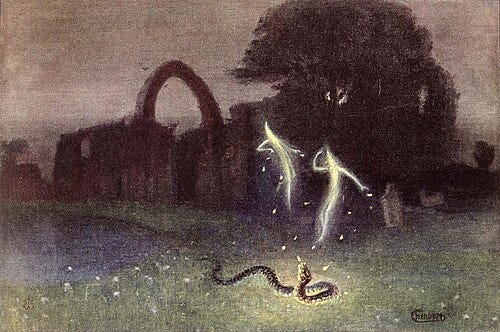
But I stood at the window and watched for minutes as the scene unfolded. I ran upstairs for a few seconds before coming back to a dark, empty night. I still don’t know what happened, but in the days after, I couldn’t help but think of the Will-o'-the-Wisp2. The old fae stories of distant fires and lights, said to lure people off of paths, and into bogs and marshes. I wondered if something was calling me, hoping I would offer a helping hand.
We’re looking to hear from YOU! The monthly issue is open to submissions from the Macabre Monday community. Have a review of a film or book? Want to post a horror opinion essay? Do you have short fiction that you want featured? Are you an artist looking for a spotlight in the horror community? Email us, leave a comment, or message us in the weekly chat.
Contact us: macabremondayteam@gmail.com